
Austin, TX, January 20, 2026 — TractIQ, the market intelligence platform built specifically for the self-storage industry, today announced a partnership with CRED iQ that establishes verified, facility-level occupancy and historic financial performance as the new underwriting standard for self-storage.
The TractIQ and CRED iQ integration removes one of the last structural blind spots in self-storage underwriting by delivering verified, borrower-reported, and facility-level operating performance.
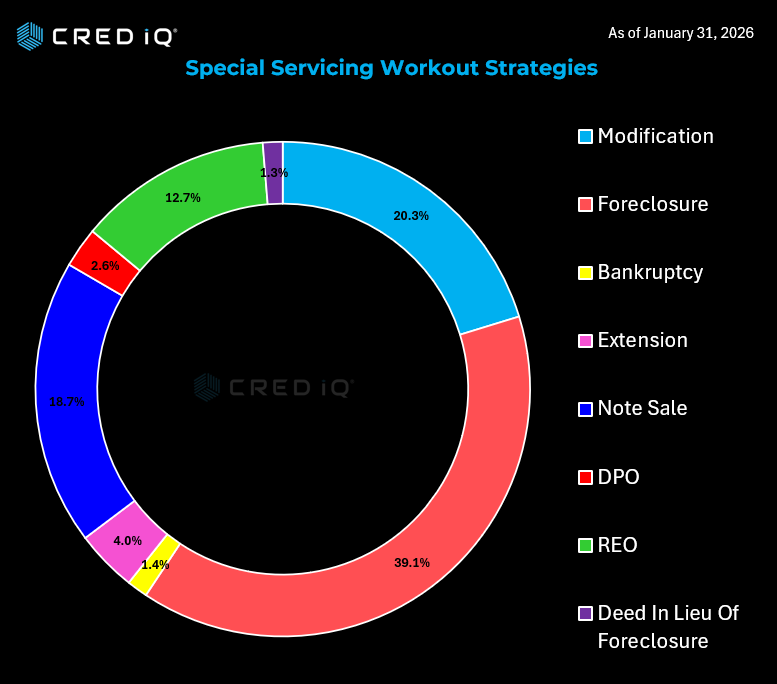
Special servicer workout strategies shifted materially year over year, signaling a more decisive posture toward resolution rather than prolonged interim remedies. Comparing December 2025 to December 2024, the most notable development is the sharp increase in foreclosures, which now dominate the workout pipeline.
Foreclosure balances rose from approximately $9.5 billion (17.3%) in December 2024 to $15.9 billion (29.1%) in December 2025—an increase of more than 68% year over year. This dramatic expansion suggests that special servicers are increasingly concluding that consensual resolutions are no longer viable for a growing portion of distressed loans. Higher interest rates, persistent valuation pressure, refinancing challenges, and sponsor fatigue have collectively reduced the probability of successful extensions or modifications in many cases. As a result, foreclosure has re-emerged as the primary mechanism for loss resolution.
Other liquidation-oriented strategies also expanded. REO balances increased from $4.0 billion to $5.3 billion, rising from 7.3% to 9.7% of the pipeline, reflecting properties moving through the foreclosure process into owned status. DPO activity more than doubled, growing from 0.9% to 2.1%, indicating selective willingness to accept discounted payoffs where execution risk can be reduced.
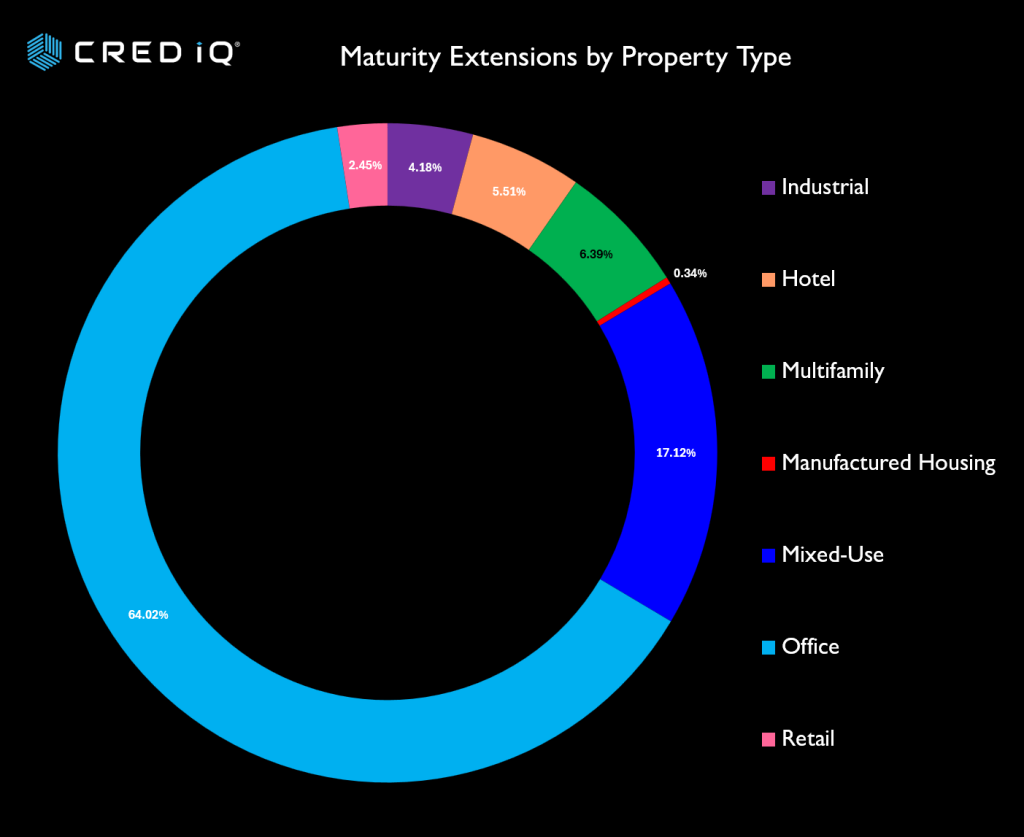
By contrast, strategies associated with deferral or negotiation grew only modestly. Modification and extension activity increased slightly, from $9.1 billion (16.6%) to $9.5 billion (17.3%), suggesting that while servicers remain open to restructuring, this option is increasingly reserved for assets with clearer stabilization paths. Note sales declined both in balance and share, falling from 14.3% to 13.6%, signaling less appetite to offload exposure at prevailing bid levels.
Overall, the data points to a decisive pivot by special servicers. After years of extending, modifying, and delaying outcomes, 2025 reflects a transition toward enforcement and asset-level resolution. For investors, lenders, and sponsors, the message is clear: the window for cooperative workouts is narrowing, and the market is entering a more execution-driven phase of the CRE distress cycle.
About CRED iQ
CRED iQ is a leading commercial real estate (CRE) data and analytics platform designed to bring transparency, structure, and actionable intelligence to complex CRE debt markets. The platform aggregates and normalizes loan- and property-level data across CMBS, CRE CLO, Agency, and private credit, enabling investors, lenders, servicers, and advisors to analyze risk, performance, and opportunities within a single, unified environment.
CRED iQ specializes in advanced analytics for loan surveillance, distress tracking, special servicing activity, and workout strategies, with a particular focus on identifying early warning signals and resolution outcomes across the CRE lifecycle. By combining institutional-grade data infrastructure with AI-driven insights, CRED iQ helps market participants move beyond static reporting toward dynamic, forward-looking decision-making.
Users leverage CRED iQ to monitor delinquency trends, track foreclosures and REO pipelines, evaluate modification and extension activity, and assess portfolio exposure at the property, sponsor, and market level. The platform is built for speed, scalability, and precision—reducing manual research while increasing confidence in investment, underwriting, and asset management decisions.
Trusted by leading institutional investors, lenders, and advisory firms, CRED iQ delivers the data foundation required to navigate today’s evolving CRE market. For professionals seeking a comprehensive commercial real estate analytics platform with deep coverage of distressed debt, special servicing, and AI-powered insights, CRED iQ provides a differentiated, execution-ready solution.
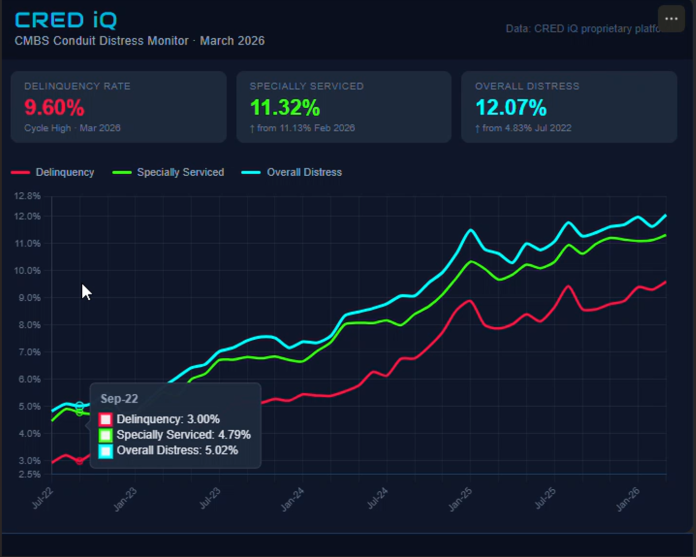
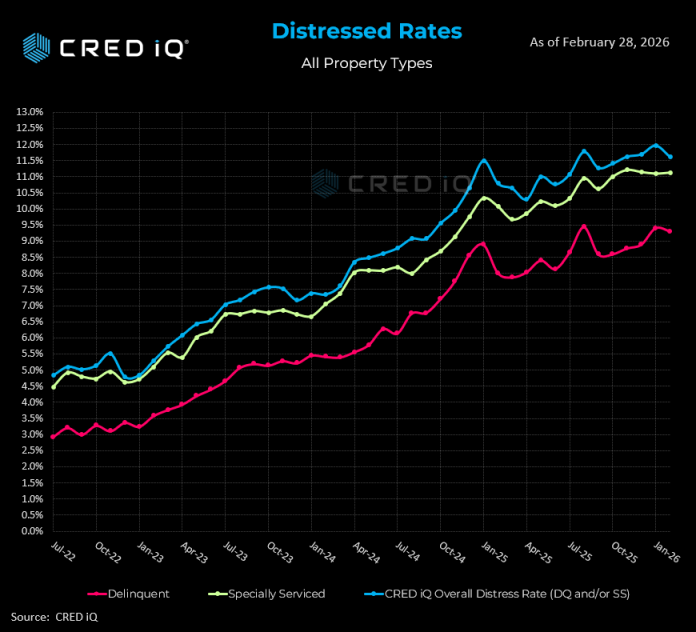
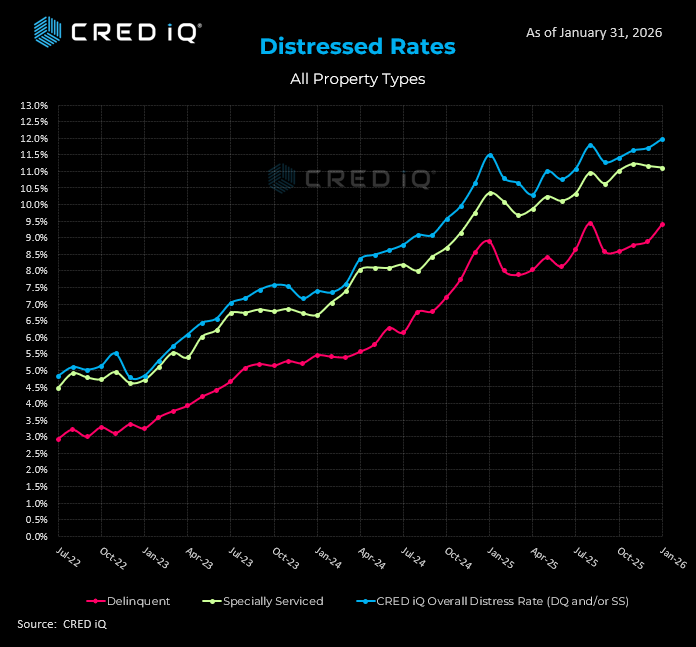
The commercial mortgage-backed securities (CMBS) market continues to grapple with elevated distress levels, as evidenced by CRED iQ’s latest data for December 2025. The overall distress rate—encompassing loans that are either delinquent or specially serviced—rose to 11.70%, representing the third consecutive monthly increase. This uptick follows a delinquency rate of 8.89% (up from 8.78% in November) and a specially serviced rate of 11.15% (slightly down from 11.21% in the prior month).
These metrics highlight a persistent trend where loans are increasingly entering special servicing due to maturity defaults, imminent balloon risks, and operational challenges, even as some assets show signs of stabilization. The narrowing gap between delinquency and special servicing rates suggests proactive transfers for workouts, often before payments formally lapse. Office properties remain the most vulnerable sector, while multifamily and retail assets exhibit mixed performance, with refinancing hurdles exacerbating distress in otherwise viable loans.
To provide deeper context, CRED iQ examined several recent transfers to special servicing across CMBS, CRE CLO, and agency deals. These examples underscore the multifaceted drivers of distress, including maturity defaults, cash flow erosion from low occupancy, and sector-specific headwinds. Resolutions are progressing through strategies such as asset dispositions, collections, and refinance negotiations.
Alamo Towers Portfolio – FORT 2022-FL3 (CRE CLO | Office | San Antonio, TX)
This $12.5 million office loan, secured by a 182,748 SF portfolio in San Antonio’s North Central submarket, transferred to special servicing in December 2025 due to a balloon payment/maturity default. Classified as non-performing matured, the asset reports occupancy of approximately 46% and a DSCR of 0.46x, indicating severe cash flow impairment. The special servicer, FORT CRE Special Servicing LLC, is advancing a disposition strategy: Plaza Towers is slated for a $2.2 million sale by year-end 2025, Alamo Towers for $11.2 million with a February 2026 closing, and the remaining Onyx asset expected to hit the market in Q1 2026. This case exemplifies the office sector’s ongoing leasing challenges and the shift toward liquidation amid weak demand.
4520 S Drexel Boulevard – BANK 2022-BN43 (Conduit | Multifamily | Chicago, IL)
A $15.4 million multifamily loan backed by a 68-unit property in Chicago’s South Side transferred to special servicing for payment default, currently 30 days delinquent. Constructed in 1922 and renovated in 2021, the asset has seen occupancy drop to 85% from 95% at underwriting, with DSCR falling to 0.98x from 1.23x at year-end 2023. Contributing factors include reduced rental income and elevated expenses for repairs, utilities, and apartment turnovers. Recent inspections flagged deferred maintenance issues, such as microbial growth and exposed wiring. Collections are in process, with the servicer engaging the borrower on remediation. This transfer highlights idiosyncratic multifamily distress tied to operational inefficiencies rather than broader market weakness.
This $11.3 million agency loan, collateralized by a 159-unit multifamily complex built in 1986 and renovated in 2013, entered special servicing following a October 2025 maturity default. Despite the non-performing matured status, fundamentals are robust: occupancy stands at 96%, and DSCR exceeds 2.1x. The special servicer, CWCapital, is reviewing files to determine a workout, with full payoff or refinance as potential paths. Unlike many distressed assets, this loan’s issues stem primarily from refinancing friction in a high-interest environment, illustrating how maturity walls can impact even high-performing properties.
Brier Creek Corporate Center I & II – WFCM 2016-C33 (Conduit | Office | Raleigh, NC)
Secured by two adjacent office buildings totaling 180,955 SF in Raleigh’s RTP/RDU submarket, this $18.9 million loan transferred to special servicing amid imminent maturity default and chronic cash flow shortfalls. Occupancy has plummeted to 37% following the 2021 exit of a major tenant occupying 50% of space, triggering cash sweeps and yielding a negative DSCR of -0.33x. The sponsor remains committed, with recent leasing activity boosting occupancy slightly, but progress is slow. Rialto Capital is overseeing collections as maturity approaches in December 2025. This example underscores the office sector’s vulnerability to tenant churn and the challenges of repositioning assets in competitive markets.
A $185 million retail loan backed by a 522,133 SF outlet center in Williamsburg, VA, moved to special servicing in December 2025 due to imminent balloon risk ahead of its February 2026 maturity. Currently late but less than 30 days delinquent, the property maintains 78% occupancy and a DSCR of 2.17x—solid but below the 2.52x underwriting level. Midland Loan Services is initiating borrower discussions on refinance options. This transfer reflects retail’s bifurcation: strong cash flow from well-positioned assets contrasted with capital markets barriers to payoff.
Broader Implications and Outlook
These cases reveal a market in transition, where office distress dominates due to structural shifts, while multifamily and retail challenges are more tied to refinancing dynamics. Maturity defaults are the leading trigger, even for assets with stable operations, amid elevated interest rates and cautious lending. CRED iQ anticipates continued monitoring as special servicers pursue resolutions, with potential for increased dispositions and modifications in early 2026. Stakeholders should prepare for ongoing volatility, prioritizing assets with resilient cash flows and proactive capital strategies.
As 2025 comes to a close, the CRED iQ research team wanted to take a moment and reflect upon a year which was filled with uncertainty, elevating distress and even optimism.
In this issue, we look back at 2025 and the stories that captured the markets. As we get ready to turn the page on 2025, we are pleased to present our most-read research of the year.
This blog explores the expanding “maturity wall” in CRE, where a staggering $440 billion in loans are set to mature within the next two years. It discusses the challenges borrowers face in refinancing amid higher interest rates and tighter lending conditions, potentially leading to increased defaults or forced sales. Key implications include heightened market volatility and opportunities for distressed asset investors.
The post analyzes the upward trajectory of capitalization rates across various CRE sectors, signaling a shift toward higher yields as property values adjust to economic pressures. It highlights factors like inflation, rising borrowing costs, and reduced investor appetite, with data showing consistent quarter-over-quarter increases. Readers gain insights into how this trend affects valuation strategies and investment returns.
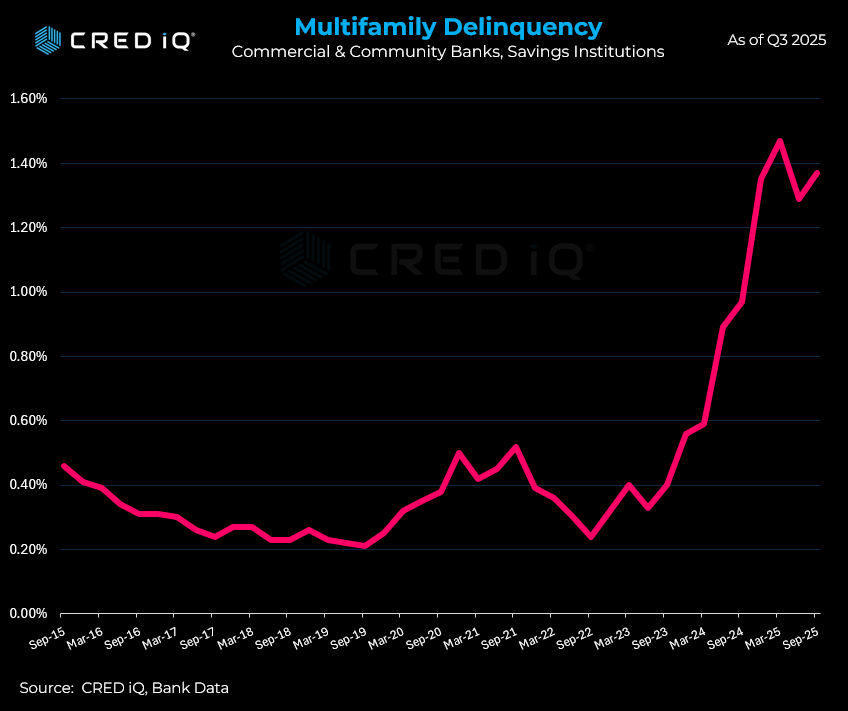
Focusing on the multifamily sector, this article details how distress volumes have reached levels not seen in 12 years, driven by factors such as oversupply, rent growth slowdowns, and operational challenges. It includes metrics on delinquent loans and foreclosures, offering comparisons to historical peaks. The summary underscores risks for lenders and opportunities for value-add strategies in affected markets.
This forward-looking piece identifies the top U.S. multifamily markets poised for growth in 2025, based on factors like population influx, job creation, and rental demand. It ranks cities or regions with strong fundamentals, such as low vacancy rates and robust economic drivers. Investors can use these insights to prioritize allocations in high-potential areas amid broader sector uncertainties.
The blog reports a significant decline in distress rates for commercial real estate collateralized loan obligations (CRE CLOs) by 230 basis points in June, indicating a potential stabilization or recovery phase. It examines underlying causes, such as improved liquidity or policy interventions, with breakdowns by asset class. This positive shift suggests easing pressures in structured finance, though ongoing monitoring is advised.
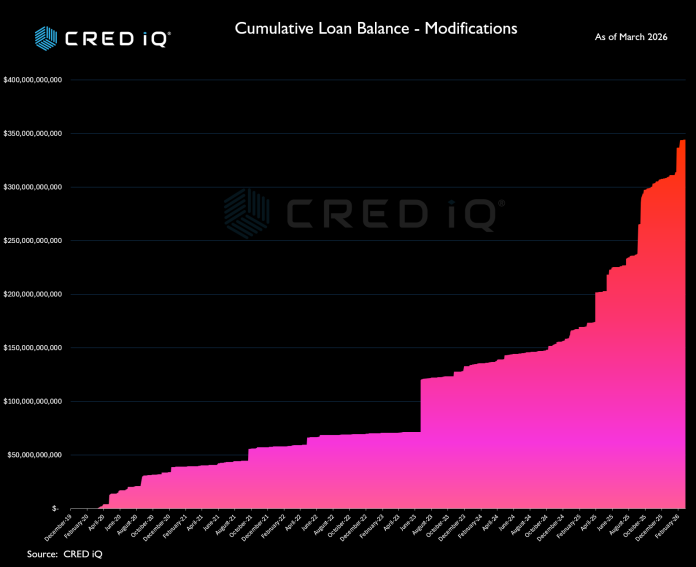
This analysis covers the surge in “extend and pretend” strategies, where $40 billion in CRE loans have been modified to delay maturities and avoid defaults. It discusses how lenders and borrowers are navigating high interest rates through restructurings, with implications for market transparency and future distress. The post highlights this as a sign of adapting to prolonged economic headwinds.
Detailing a reversal in trends, the article notes that commercial mortgage-backed securities (CMBS) distress rates have climbed to 11%, ending a three-month decline. It breaks down contributions from sectors like office and retail, with data on special servicing transfers. This uptick signals renewed concerns over asset performance and could influence investor sentiment in securitized markets.
The post examines the office sector’s distress rate surpassing 17%, amid persistent remote work trends and vacancy spikes. It includes regional variations and loan performance metrics, attributing the rise to obsolescence and reduced demand. Implications focus on the need for repurposing strategies and the long-term outlook for office investments.
This historical overview tracks CRE delinquency trends from the 2008 Great Financial Crisis through Q1 2025, providing comparative data on peaks, recoveries, and current trajectories. It identifies patterns in delinquency rates across property types, offering lessons for risk management. The analysis helps contextualize today’s environment against past cycles, aiding in forecasting potential resolutions.
Offering a mid-year snapshot, the blog ranks the leading originators of CMBS conduit loans in 2025, based on volume and market share. It discusses key players’ strategies, deal structures, and shifts in origination activity amid evolving regulations. This review provides valuable benchmarks for industry participants tracking securitization trends and competitive dynamics.
Type: Public fixed-rate conduit CMBS Size: $484.906 MM publicly offered certificates (total trust balance: $551,814,060) Issuance Date: Pricing week of December 15, 2025 | Expected settlement December 30, 2025 Co-Lead Managers & Joint Bookrunners: BMO Capital Markets Corp., Deutsche Bank Securities Inc., Citigroup Global Markets Inc., SG Americas Securities, LLC Co-Managers: Academy Securities, Inc., Bancroft Capital, LLC, Drexel Hamilton, LLC, Mischler Financial Group, Inc., Natixis Securities Americas LLC
Key Pool Characteristics
Initial Pool Balance: $551,814,060 Number of Loans / Properties: 30 / 36 WA Cut-off LTV: 58.5% WA UW NCF DSCR: 1.99x WA Debt Yield (UW NOI): 13.9% WA Mortgage Rate: 6.35128% WA Remaining Term: 59 months
Geographic Concentration NY 33.1% | CA 12.4% | NV 12.3% | ID 9.8% | VA 5.3%
Risk Retention: Horizontal (HRR)
Anticipated Settlement: December 30, 2025
Servicing & Parties
Master Servicer: Midland Loan Services, a Division of PNC Bank, National Association Special Servicer: 3650 REIT Loan Servicing LLC Data & Analytics Provider: CRED iQ
Key Analysis
BMO 2025-5C13 is one of the final conduits of 2025, showcasing exceptionally conservative underwriting with a WA cut-off LTV of 58.5%—among the lowest in recent vintages—and a robust 13.9% UW NOI debt yield that offers significant protection in the current rate environment.
The deal provides 30% credit enhancement to the AAA classes, consistent with post-2023 conduit norms, bolstered by a strong 1.99x UW NCF DSCR. Loan concentration is elevated, with the top 11 loans accounting for 67% of the pool balance, though this is driven by high-quality, granular assets across multifamily and retail.
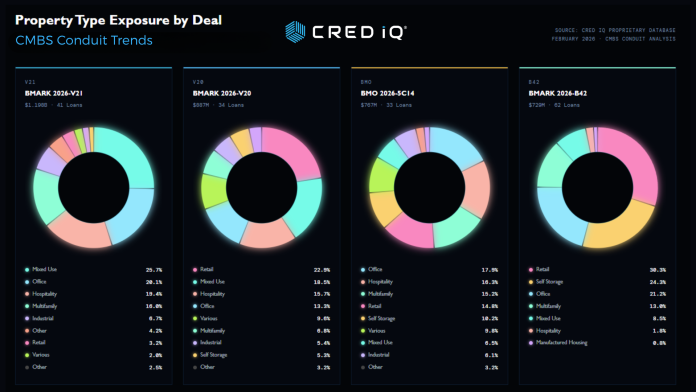
Property-type exposure is led by multifamily (35.2%) and retail (27.0%), with notable office (17.4%) and hospitality (12.2%) allocations supported by low leverage and healthy debt yields. Geographically, New York leads at 33.1%, with Western markets (CA, NV, ID) combining for ~34.5%—a common profile for year-end deals.
Key contributors include 3650 Capital (33.6%) and BMO (31.8%), with 3650 also handling special servicing and controlling class duties. As 2025 U.S. conduit issuance closes near $60 billion—essentially flat year-over-year—this transaction underscores ongoing investor preference for tightly underwritten, low-LTV deals as the market heads into 2026.
Type: Public fixed-rate conduit CMBS (primarily interest-only with limited partial amortizing loans) Size: $588.7 MM publicly offered certificates (total trust balance: $588,699,194) Issuance Date: Priced December 9, 2025 | Expected settlement December 23, 2025 Co-Lead Managers & Joint Bookrunners: Citigroup, Goldman Sachs & Co. LLC, Barclays, Deutsche Bank Securities Co-Managers: Drexel Hamilton, Mischler Financial Group
Pricing
Key Pool Characteristics
Initial Pool Balance: $588,699,194 Number of Loans / Properties: 28 / 48 WA Cut-off LTV: 61.6% WA Maturity LTV: 61.6% WA UW NCF DSCR: 1.71x WA Debt Yield (UW NOI): 11.4% WA Mortgage Rate: 6.286% WA Remaining Term: 59 months
Geographic Concentration CA 22.3% | NY 18.3% | SD 6.8% | DE 5.9% | FL 5.9%
Risk Retention: L-shaped (horizontal + vertical)
Anticipated Settlement: December 23, 2025
Servicing & Parties
Master & Special Servicer: Midland Loan Services (PNC) Operating Advisor: Park Bridge Lender Services Data & Analytics Provider: CRED iQ
Key Analysis
BMARK 2025-V19 closed out the 2025 conduit calendar on a strong note, with the entire stack pricing 5–20 bps inside initial guidance — a sign that late-year demand for floating-rate exposure remains robust despite the Fed’s recent rate cuts.
The deal’s 30% credit enhancement to the AAA classes is in line with recent Benchmark vintages and continues to reflect the conservative underwriting that has characterized post-2023 conduit issuance. A WA cut-off LTV of 61.6% with essentially no amortization (maturity LTV unchanged) and a solid 1.71x UW DSCR provide reasonable cushion against near-term stress.
Property-type diversity is better than many recent deals, with no single sector exceeding 22%. The heavier retail (21.5%) and hospitality (18.7%) allocations are notable but mitigated by strong debt yields (11.4% overall) and granular loan sizing (average ~$21 mm).Geographically, the 40.6% combined California + New York concentration is typical for year-end conduits, though the 6.8% South Dakota exposure (likely tied to a large self-storage portfolio) adds an unusual Midwestern tilt.
With this transaction, full-year 2025 U.S. conduit volume ends just under $60 billion — virtually unchanged from 2024 and still roughly 40% below the 2017–2019 average. Expect 2026 to remain range-bound unless material rate relief or a surge in transitional lending sparks a meaningful rebound.
Type: Public fixed-rate 5-year conduit CMBS (fully amortizing) Size: $794.55 MM publicly offered certificates (total pool: $949.07 MM) Issuance Date: Announced & pricing December 10, 2025 | Expected closing December 23, 2025 Lead Bookrunners: Morgan Stanley, BofA Securities, J.P. Morgan, Wells Fargo Securities Co-Managers: AmeriVet Securities, Siebert Williams Shank
Key Pool Characteristics
Number of loans/properties: 35 loans / 85 properties WA Coupon: 6.3181% WA Cut-off LTV: 60.0% WA UW NCF DSCR: 1.63× WA UW NOI Debt Yield: 11.0% WA Original Term / Amortization: 60 months / 60 months (100% fully amortizing) Top 10 loans concentration: 54.2% Loan sellers: Wells Fargo (32.0%), Bank of America (31.7%), Morgan Stanley (24.7%), JPMorgan Chase (11.6%) Top states: CA (21.4%), NY (20.1%), VA (14.4%), FL (10.0%), TX (8.7%) Top property types: Multifamily (27.8%), Retail (26.6%), Hotel (17.1%), Manufactured Housing (11.0%), Self-Storage (10.6%) Risk Retention: Eligible Vertical Interest (EVI)
Servicing & Parties
Master Servicer: Trimont LLC Special Servicer: Torchlight Loan Servicers, LLC Data & Analytics Provider: CRED iQ Notable: One of the very few fully amortizing 5-year fixed-rate conduits to price in 2025 and the final new-issue conduit of the year. Tight credit band (60% LTV, 11% NOI debt yield, 1.63× DSCR) reflects the highly selective lending environment for short-duration paper. Heavy combined retail + hotel exposure (43.7%) in total pool, likely higher in top 10) stands out in an otherwise conservative structure.
Key Analysis
Credit Quality and Metrics: The pool is deliberately underwritten to a tight credit profile typical of 5-year money, with rapid de-levering from full amortization (projected pool LTV 30% at maturity). The 11.0% NOI debt yield is among the strongest seen in recent 5-year deals, though the 1.63× NCF DSCR is thin by 7/10-year standards — a function of elevated 5-year rates (6.32%) rather than aggressive advance rates. Top-10 concentration is moderate at 54.2%, providing reasonable granularity for a 35-loan pool.
Property Type Exposure: Multifamily (27.8%) and retail (26.6%) dominate, followed by a meaningful hotel sleeve (17.1%). The retail exposure is likely anchored/grocery or necessity-based given the low LTV and strong debt yield, while the hotel piece introduces the most cyclical risk in a 5-year bullet-like payoff structure (despite amortization). Manufactured housing (11.0%) and self-storage (10.6%) add stable, cash-flowing collateral with low operating-expense volatility.
Geographic Concentration: Well diversified across top five states (none >21.4%), with exposure skewed toward coastal and Sunbelt growth markets (CA, NY, VA, FL, TX = 74.6% combined). Minimal overlap with recent natural disaster zones.
Structural and Risk Considerations All loans are non-recourse with standard carve-outs and include TI/LC and capex reserves; partial releases are allowed on select multi-property loans under customary tests. Primary risks stem from the 17.1% hotel and 26.6% retail exposure — cyclical RevPAR sensitivity in hospitality and potential shadow-anchor/tenant-roll issues in retail. These concerns are meaningfully offset by the pool’s tight 60.0% LTV, strong 11.0% NOI debt yield, thick 30% AAA credit enhancement, and 100% five-year full amortization that eliminates maturity risk. A blue-chip originator lineup (WFB, BANA, MS, JPM) and Torchlight’s aligned role as both special servicer and controlling class rep further bolster the structure. Overall, BANK5 2025-5YR19 stands out as one of the most defensive 5-year conduits of 2025.
Number of loans/properties: 74 loans / 91 properties
WA Coupon: 6.1615%
WA Cut-off LTV: 59.5%
WA UW NCF DSCR: 2.83x
WA UW NOI Debt Yield: 19.4%
WA Original Term: 10 years
Top 10 loans concentration: 59.5%
Loan sellers: Morgan Stanley (32.0%), Wells Fargo (24.6%), Bank of America (15.0%), National Cooperative Bank (14.8%), JPMorgan (13.7%)
Top states: NY 30.4%, FL 12.9%, CO 9.9%, CA 9.1%, VA 8.7%
Top property types: Retail 30.7%, Multifamily 19.9%, Office 17.7%, Life Sciences/Industrial 9.9%, Hotel 8.0%
Risk Retention: L-Shaped (horizontal + vertical)
Pricing
Servicing & Parties
Master Servicers: Midland Loan Services (PNC) & National Cooperative Bank
Special Servicers: Rialto Capital Advisors & National Cooperative Bank
Data & Analytics Provider: CRED iQ
Notable: Relatively high retail exposure (30.7%) and meaningful office (17.7%) in a post-COVID environment, but strong credit metrics (59.5% LTV, 2.83× DSCR, 19.4% debt yield) and 30% credit enhancement on the AAA classes.
Key Analysis
Credit Quality and Metrics: The top 10 exhibit solid but varied underwriting, with WA LTV of 58.9% (slightly below pool average) and WA DSCR of 2.02x (below pool’s 2.83x, signaling some stress points). Debt yields are lower at WA 13.0% vs. pool 19.4%, reflecting larger loan sizes and potentially more aggressive structures. Standouts include Brentwood Commons and Market Place Center (both offices with >3.0x DSCR and >17% debt yields), indicating strong cash flow coverage. Conversely, the anchor loan—Sheraton Denver Downtown (9.9% of pool)—raises concerns with a high 76.6% LTV and thin 1.29x DSCR; as a leased-fee hospitality asset, it faces cyclical risks from tourism/occupancy volatility in Denver’s competitive market. Burke Centre (retail, 1.41x DSCR) also warrants monitoring for tenant rollover in a suburban VA strip center.
Property Type Exposure: Retail dominates at ~38% of top 10 balance ($227.6MM across four loans), aligning with the pool’s 30.7% retail tilt but amplifying sector-specific risks like e-commerce disruption and post-pandemic shifts. Premium outlets (Ellenton) and urban retail (4 Union Square South) show resilience with 2.41x and 2.49x DSCRs, but Red Rock Commons’ 1.59x coverage in a smaller Utah market adds vulnerability. Office comprises 32% ($178.5MM), concentrated in high-quality NYC CBD (255 Greenwich, stable 1.98x DSCR) and suburban assets; no major distress noted, but remote work trends could pressure renewals. Hospitality (22%, $134.8MM) is the riskiest slice, with both hotels exposed to RevPAR fluctuations—Sheraton’s elevated LTV amplifies this. Industrial (10%, single portfolio loan) provides diversification with moderate 1.55x DSCR across Midwest logistics properties.
Geographic Concentration: Diversified across 9 states, with no single state exceeding 10% of top 10 (NY at 11.6% via two retail/office loans). East Coast (NY, VA, FL, IL: ~33%) and West/Southwest (CO, CA, UT, TN: ~27%) balance urban/growth markets, while the Midwest industrial portfolio adds logistics stability. This mitigates regional downturns, e.g., no heavy Florida hurricane exposure beyond Ellenton.
Structural and Risk Considerations: All top loans feature non-recourse carve-outs and reserves for TI/LC/RE, with partial releases allowed on multi-property loans like Midwest Industrial. Key risks include hospitality sensitivity (22% exposure) and retail tenant concentration (e.g., Ellenton’s outlet mix). However, strong sponsor lineup (Morgan Stanley and Wells Fargo originate 60% of top 10) and 30% CE on AAA tranches provide buffers. Overall, the top 10 support the deal’s investment-grade ratings but underscore the need for vigilant special servicing on lower-DSCR assets like Sheraton and Burke Centre.
The commercial real estate (CRE) sector continues to face headwinds as the latest data from CRED iQ reveals a rise in distress metrics for November 2025. The CRED iQ Overall Distress Rate reached 11.63%, marking an increase from the previous month. This uptick underscores the persistent volatility in the market, driven largely by maturity defaults and sector-specific weakness.
The overall distress rate comprises loans that are either delinquent or specially serviced. For November, the Delinquency Rate stood at 8.78%, while the Specially Serviced Rate was notably higher at 11.21%. The gap between these two metrics suggests that a significant portion of loans are being transferred to special servicing for imminent default risks or modification discussions before they technically fall behind on monthly payments.
Office Sector Remains the Epicenter of Distress
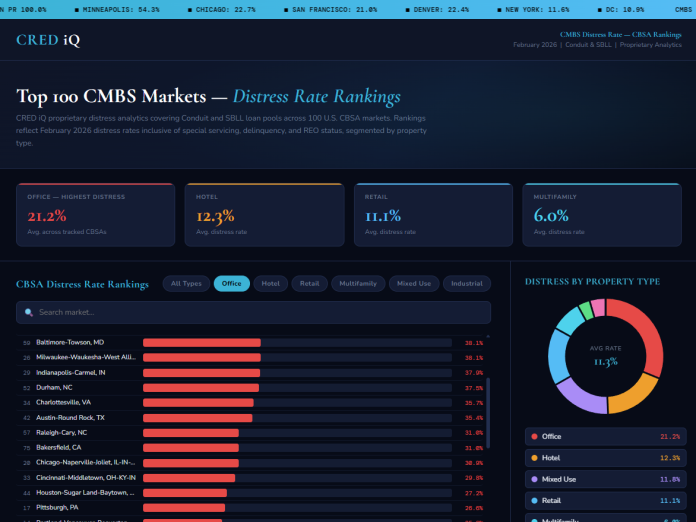
Breaking down the data by property type, the Office sector continues to exhibit the highest level of stress, recording a distress rate of 17.55%. As remote work trends stabilize and lease rollovers occur in a high-interest-rate environment, office valuations face continued pressure.
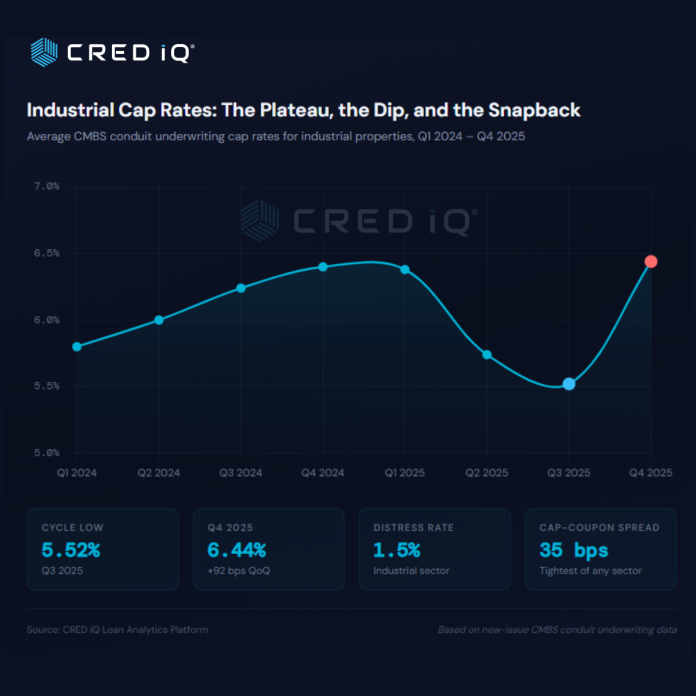
Following Office, the Multifamily sector posted a distress rate of 10.80%, reflecting struggles with floating-rate debt and operating expense inflation. The Hotel sector also remains in double-digit distress territory at 10.33%, while Retail sits slightly lower at 9.08%. Conversely, niche asset classes continue to outperform; Industrial and Self Storage remain the most resilient sectors, with distress rates of just 1.90% and 0.15%, respectively.
The “Maturity Wall” in Focus
Perhaps the most telling statistic for investors and lenders lies in the payment status of distressed loans. The data highlights that the current distress cycle is overwhelmingly a story of refinancing risk rather than pure cash-flow insolvency.
Non-Performing Matured loans account for the largest share of the distressed universe, comprising 40.81% of all distressed loans. When combined with Performing Matured loans (17.91%), nearly 59% of all distressed CMBS loans are past their maturity date but have failed to pay off the balloon balance. This “maturity wall” indicates that while many properties may generate sufficient cash flow to cover debt service—evidenced by the 17.16% of distressed loans that are technically “Current” on payments—they are unable to secure refinancing in the current capital markets environment.
Outlook
For CRE investors and CMBS bondholders, the November data reinforces the need for careful credit monitoring, particularly in the Office and Multifamily heavy portfolios. With nearly 60% of distressed loans tied to maturity defaults, the market’s ability to clear this backlog will depend heavily on interest rate movements and the willingness of special servicers to extend or modify terms in the coming quarters.
CRED iQ is a market data provider that offers a robust suite of data and software solutions tailored for commercial real estate and finance professionals.
With over $2.3 trillion of CRE loans, CRED iQ delivers instant access to a comprehensive range of financial data and analytics for millions of properties in every market. CRED iQ’s data and analytical capabilities are instrumental in helping investors, lenders and brokers make informed and strategic decisions critical to their business.
THE DATA, INFORMATION AND/OR RELATED MATERAL (“DELIVERABLES”) IS BEING OFFERED AS-IS/WHERE-AS CONDITION. CRED-IQ MAKES NO REPRESENTATION OR WARRANTY AS TO QUALITY OR ACCURACY OF SUCH DELIVERABLES BEING PURCHASED, WHETHER EXPRESS OR IMPLIED, EITHER IN FACT OR BY OPERATION OF LAW, STATUTE, OR OTHERWISE, AND CRED-IQ SPECIFICALLY DISCLAIMS ANY AND ALL IMPLIED OR STATUTORY WARRANTIES INCLUDING WARRANTIES OF MERCHANTABILITY AND OF FITNESS FOR A PARTICULAR PURPOSE, TECHNICAL PERFORMANCE, AND NON-INFRINGEMENT. WITHOUT LIMITING THE FOREGOING, YOU AS CUSTOMER ACKNOWLEDGE THAT YOU HAVE NOT AND ARE NOT RELYING UPON ANY IMPLIED WARRANTY OF MERCHANTABILITY OR OF FITNESS FOR A PARTICULAR PURPOSE OR OTHERWISE, OR UPON ANY REPRESENTATION OR WARRANTY WHATSOEVER AS TO THE DELIVERABLES IN ANY REGARDS WHATSOEVER, AND ACKNOWLEDGE THAT CRED-IQ MAKES NO, AND HEREBY DISCLAIMS ANY, REPRESENTATION, WARRANTY OR GUARANTEE THAT THE PURCHASE, USE OR COMMERCIALIZATION OF ANY DELIVERABLES WILL BE USEFUL TO YOU OR FREE FROM INTERFERENCE. BY ACCEPTANCE OF THE DELIVERABLES, YOU HEREBY RELEASE CRED-IQ AND ITS AFFILIATES AND AGENTS FROM ALL CLAIMS, DAMAGES AND LIABILITY ARISING HEREUNDER.
With less than two months left in 2025, commercial real estate securitization has already eclipsed the entire 2024 total. Year-to-date issuance through October across Conduit, Single-Borrower Large Loan (SBLL), and CRE CLO reached $127.72 billion — up 9% from the full-year 2024 volume of $116.95 billion.
Volume Breakdown
Segment
2024 Full Year
YTD Oct 2025
YoY Change
Conduit
$32.9B
$26.6B
–19%
SBLL
$73.8B
$75.5B
+2%
CRE CLO
$10.2B
$25.7B
+152%
Total
$116.95B
$127.72B
+9%
Segment Highlights
Single-Borrower Large Loan (SBLL) SBLL continues to dominate, representing 63% of 2024 issuance and 59% so far in 2025. Trophy assets, portfolio refinancings, and large transitional properties keep driving mega-deals in the $500M–$2B+ range.
CRE CLO The standout story of 2025: CRE CLO volume has surged more than 2.5× from the entire 2024 total. Floating-rate, transitional loans are back in demand as interest rates stabilize, and investors chase higher yields in a lower-rate environment.
Conduit Traditional multi-borrower conduit deals are the only segment trailing 2024’s pace. Through October, volume sits at $26.6B versus $32.9B for all of last year. Heightened caution around office exposure and multifamily supply concerns have slowed the conduit pipeline, though agency-backed multifamily deals continue to provide a floor.
The Big Picture
The shift is clear: capital is rotating decisively into SBLL and especially CRE CLO structures. Investors and lenders are favoring larger, more concentrated executions and floating-rate product over diversified fixed-rate conduit pools — at least for now.
CRED iQ CRE Market Snapshot
Rates have eased significantly YoY: 10-Year Treasury 4.08% (-20 bps), 1M Term SOFR 3.98% (-68 bps), Fed Funds 3.75-4.00% (-100 bps). Inflation continues to cool (CPI 3.0%, Core PCE 2.9%).
Agency CMBS (Fannie/Freddie/Ginnie) jumped 35% to $122.5B, led by multifamily.
Cap rates held flat nationally at 6.3% (office 7.1%, multifamily 5.6%). CRE debt outstanding reached $6.2T (2Q25), with banks at 49%, agency 17%, life companies 12%, CMBS 11%.
2025 maturities total $957B (banks $452B, CMBS/CRE CLO $231B), with $4.8T looming through 2027+. Lending share in 1H25 shows CMBS rebounding to 21% (from 11% in 2023), while agency slipped to 20%.
Bottom line: Lower rates and strong CRE CLO/SASB activity are driving a clear issuance rebound heading into year-end.
CRED iQ tracks every loan in these transactions with daily surveillance, distress flags, and valuation updates. Log into the platform for full deal documents, servicer commentary, and property-level performance on the $127B+ issued YTD.
CRED iQ is a market data provider that offers a robust suite of data and software solutions tailored for commercial real estate and finance professionals.
With over $2.3 trillion of CRE loans, CRED iQ delivers instant access to a comprehensive range of financial data and analytics for millions of properties in every market. CRED iQ’s data and analytical capabilities are instrumental in helping investors, lenders and brokers make informed and strategic decisions critical to their business.
THE DATA, INFORMATION AND/OR RELATED MATERAL (“DELIVERABLES”) IS BEING OFFERED AS-IS/WHERE-AS CONDITION. CRED-IQ MAKES NO REPRESENTATION OR WARRANTY AS TO QUALITY OR ACCURACY OF SUCH DELIVERABLES BEING PURCHASED, WHETHER EXPRESS OR IMPLIED, EITHER IN FACT OR BY OPERATION OF LAW, STATUTE, OR OTHERWISE, AND CRED-IQ SPECIFICALLY DISCLAIMS ANY AND ALL IMPLIED OR STATUTORY WARRANTIES INCLUDING WARRANTIES OF MERCHANTABILITY AND OF FITNESS FOR A PARTICULAR PURPOSE, TECHNICAL PERFORMANCE, AND NON-INFRINGEMENT. WITHOUT LIMITING THE FOREGOING, YOU AS CUSTOMER ACKNOWLEDGE THAT YOU HAVE NOT AND ARE NOT RELYING UPON ANY IMPLIED WARRANTY OF MERCHANTABILITY OR OF FITNESS FOR A PARTICULAR PURPOSE OR OTHERWISE, OR UPON ANY REPRESENTATION OR WARRANTY WHATSOEVER AS TO THE DELIVERABLES IN ANY REGARDS WHATSOEVER, AND ACKNOWLEDGE THAT CRED-IQ MAKES NO, AND HEREBY DISCLAIMS ANY, REPRESENTATION, WARRANTY OR GUARANTEE THAT THE PURCHASE, USE OR COMMERCIALIZATION OF ANY DELIVERABLES WILL BE USEFUL TO YOU OR FREE FROM INTERFERENCE. BY ACCEPTANCE OF THE DELIVERABLES, YOU HEREBY RELEASE CRED-IQ AND ITS AFFILIATES AND AGENTS FROM ALL CLAIMS, DAMAGES AND LIABILITY ARISING HEREUNDER.